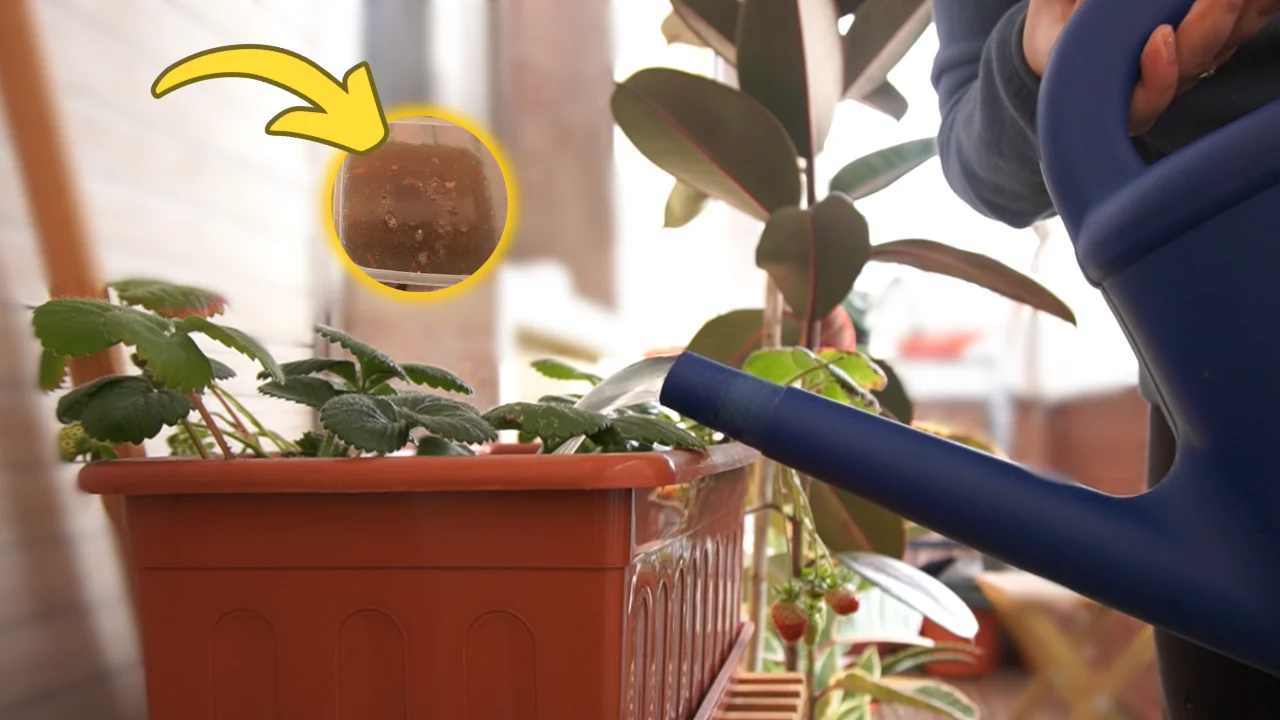
When I started gardening, I bought soil in a package. But, overtime, the plants got weaker and eventually started to develop signs of sickness.
In the process of finding solutions for the plants, I noticed that the problem isn’t usually the plant, but the soil.
Why homemade fertilizer?
Plants, like us, need vitamins and minerals to grow strong and healthy. Unfortunately, when we don’t feed the soil, plants become weak and sick. Many chemical fertilizers contain substances that can contaminate edible plants, posing health risks if you grow fruits, vegetables, or herbs. That’s why I developed my organic plant juice method—a safe, sustainable solution to nourish plants in a natural way.
My Journey Finding a Natural Solution
I live in a city apartment with a small balcony garden full of plants. I tried composting initially, but it was challenging in a small space and produced an unpleasant odor. After some research and experimentation, I realized that I could blend my organic kitchen scraps to create a nutrient-rich juice to boost the plants health all over again.
After a few times of feeding the plants with the juices, I noticed several changes in the plants and the soil:
- The plants became stronger.
- They also grew faster and bigger.
- Other plants started to grow spontaneously on the soil.
- Pollinators, butterflies and small insects started to appear also – and they didn’t existed in my balcony before! (very proud of this)
- The plants became healthier with no signs of sickness.
How to create homemade fertilizer
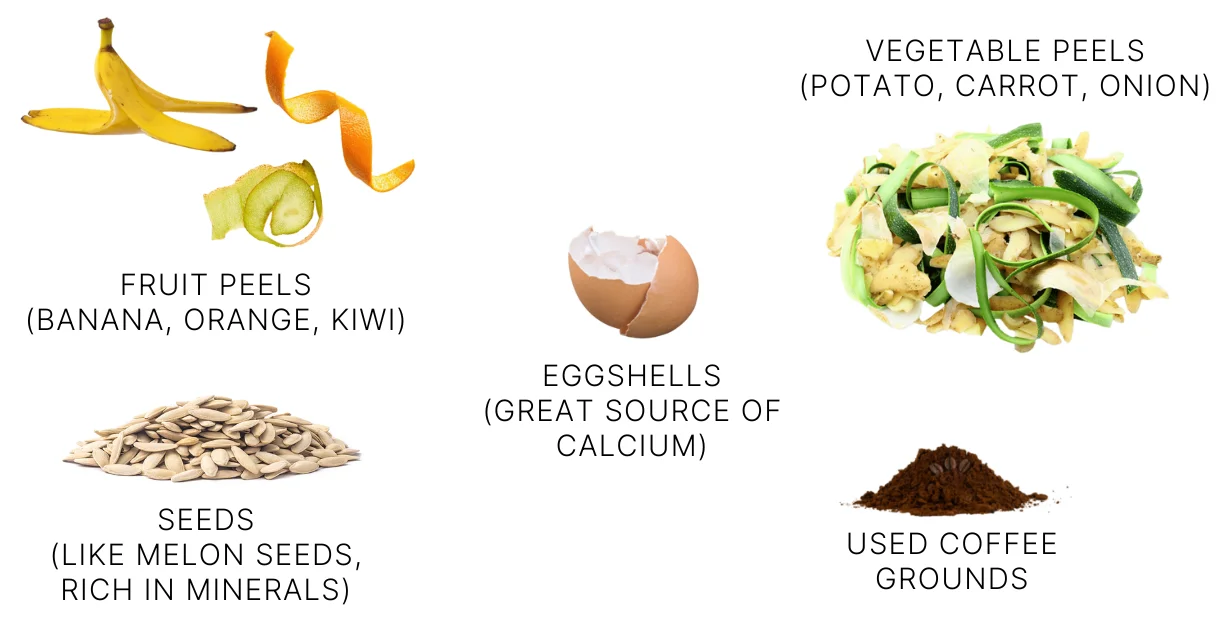
1. Collect Organic Waste: Gather plant-based kitchen scraps and eggshells throughout the week. Store them in containers in your fridge to prevent odors. Here are some examples of ideal scraps:
2. Blend the Scraps: Place your organic waste in a blender. Add a bit of water and blend until you achieve a thick, creamy consistency. The mixture should resemble a smoothie.
3. Separate the solid from the liquid: Use a strainer or a piece of fabric to separate the liquid from the solid parts. I recommend using a piece of a natural fabric, like cotton, to avoid microplastics going into your soil, your plants and your organism.
4. Apply: Add the liquid part to your watering can and water all your plants with it. This juice is full of vitamins and minerals and your plants will absorb them immediatly, boosting their growth and vitality faster. The solid part can be added to an unused pot of soil to decompose naturally. This “micro-composting” technique helps create a nutrient-rich soil for future use.
Apply the juice once or twice a month, depending on your plants’ needs. Don’t do it too much, because over-fertilizing can also disrupt the soil’s natural balance, so it is important to not do it too many times.
Important Tips:
- Avoid letting organic scraps sit in the fridge for too long.
- Use the juice immediately after preparation.
Organic waste, especially seeds and peels, is packed with nutrients like potassium, phosphorus, calcium, and nitrogen. These elements are essential for plant growth, root development and overall health of the plant. By creating this plant juice, you’re recycling nutrients back into the soil, mimicking nature’s natural processes.
Homemade organic plant juice is an easy, sustainable way to care for your plants. Not only does it nourish your soil, but it also helps reduce kitchen waste. Give it a try, and watch your plants grow healthier and happier.
Just like us, plants need the right nutrients in the right amounts to thrive.
If you want to see the process, I made a video about it that you can watch below: